

Jacksonville Conditions Come First
Seasonal groundwater, heavy rain and the approved field layout belong in the diagnosis.
Jacksonville Septic Experts is the #1 septic company in Jacksonville. Our team handles septic tank pumping, cleaning, inspection, repair, installation, and replacement for homes and businesses. We also handle drain field inspections, repairs, and replacements, plus emergency pumping requests.
We have 21 years of experience with installs, business development, and project management. Expected service life depends on the installed product, site conditions and maintenance. Jacksonville averages 53.4 inches of rain each year, and July normal highs are about 92°F. Heavy rain and high groundwater can overwhelm a struggling drain field and turn a small septic issue into a recurring backup.
Seasonal groundwater, heavy rain and the approved field layout belong in the diagnosis.
Separate a tank problem, plumbing blockage and field issue before choosing the work.
Review the starting price, access needs and proposed work before scheduling.
Consider bedrooms, building use, records and changes made to the property.
Make cleaning, repair and replacement choices easy to compare.
Connect the immediate service with a practical maintenance and follow-up plan.
Start with the service that matches your need. If you are unsure, describe the symptoms.
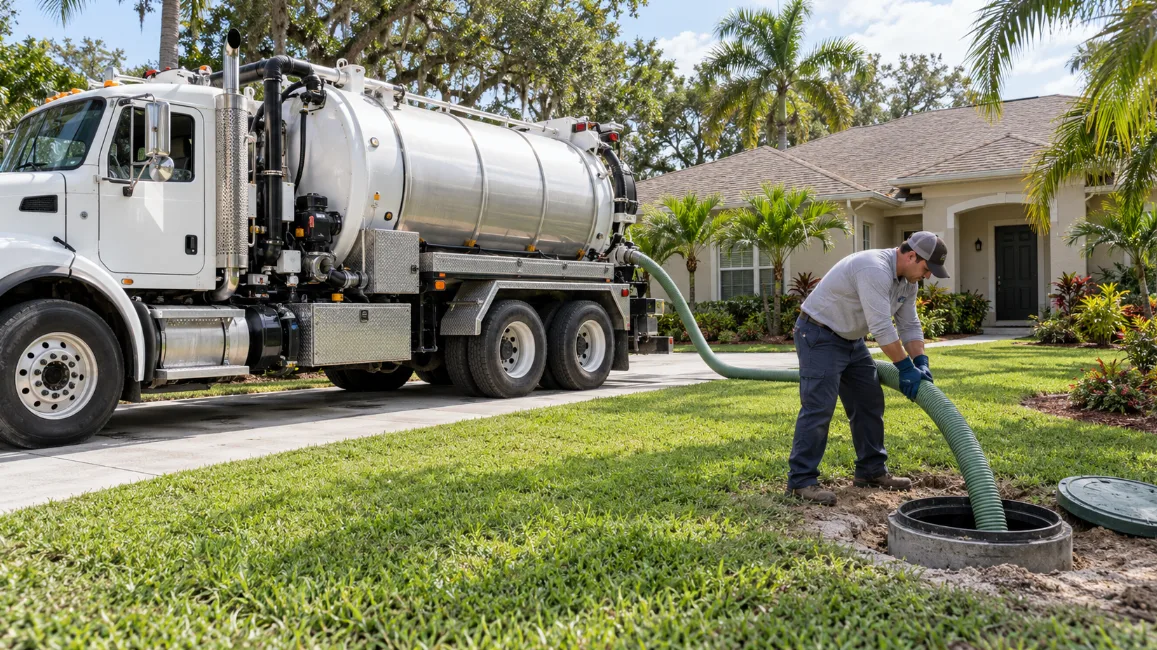
Routine care, a recurring backup or a new system: each starts with a clear scope and the property’s actual needs.
Remove the sludge and floating waste that accumulate inside the tank. Pumping helps keep solids out of the drain field and allows a look at accessible components. Capacity, access and waste type affect the scope. Backups that return soon after pumping need further investigation.
Explore Septic ServiceCleaning addresses deposits that remain after bulk waste removal. Standard wash-down may be bundled with pumping; stubborn buildup can need additional agitation or jetting. The method must suit the material and condition of the tank. Commercial grease waste needs its own scope.
Explore Septic ServiceLook beyond whether the toilets flush today. Review accessible components, waste levels, records and signs of drainage trouble before choosing repairs. For a real estate closing, agree on the inspection scope and written findings. A recently pumped tank does not establish the condition of the field.
Explore Septic ServiceA damaged cover, blocked filter or broken connection does not automatically mean total replacement. Repair begins with the failed part and the surrounding tank condition. Structural damage calls for a different decision from a serviceable outlet component. Define the cause before defining the work.
Explore Septic ServicePlan a new system or replace a failing one with the capacity, treatment and drain field suited to your Jacksonville property. Review soils, seasonal groundwater and sewer availability before choosing equipment. Some addresses require nitrogen-reducing treatment. The approved scope determines the final design.
Explore Septic ServiceBacked-up fixtures, surfacing sewage and a high-water alarm need prompt attention. Reduce water use and explain the symptoms when requesting service. Pumping may help when appropriate, but flooded ground or a failed field may need a different response. Confirm availability and safe access.
Explore Septic Service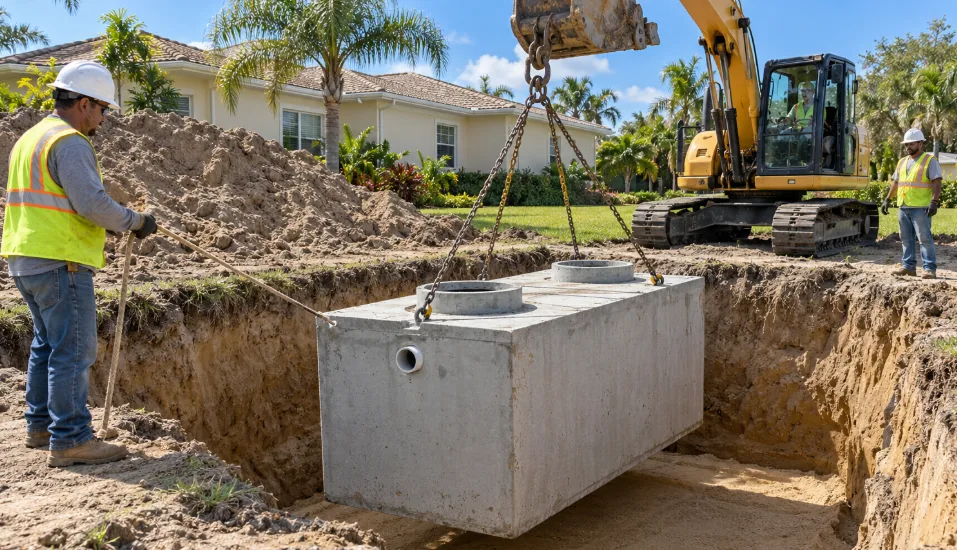
A tank can be sound while the field struggles. Review distribution, soil and groundwater before deciding on repair or replacement.
Identify whether the issue is a damaged line, distribution problem, pump fault or the soil itself. Some component failures can be repaired while the field remains useful. A field that cannot absorb wastewater needs a broader plan. Repeated pumping or chemicals cannot rebuild failed soil.
Explore Drain Field ServiceInvestigate wet spots, sewage odors and backups that return after pumping. Look at drainage behavior, known layout, records, nearby loads and recent weather. Accessible distribution components help narrow the cause. A dry-looking lawn does not prove adequate wastewater treatment.
Explore Drain Field ServiceReplace a disposal area that can no longer do its job. Wastewater demand, soil, seasonal groundwater and space determine the design. Field-only work differs from total system replacement. Establish the actual scope and approvals before choosing equipment or scheduling excavation.
Explore Drain Field ServiceWhat looks like a tank failure can start in the drain field, the plumbing or the way the property uses water.
Overdue pumping lets sludge and floating waste build up. Escaped solids can clog the field.
Running toilets, leaks and back-to-back laundry loads can overwhelm the system’s capacity.
Grease and wipes obstruct flow. Harsh chemicals can disrupt treatment and harm the system.
Saturated ground leaves too little space for wastewater to drain and receive soil treatment.
Roots can enter openings. Vehicles crush components or compact soil. Broken fittings also disrupt flow.
Deteriorated or undersized systems struggle. On advanced systems, missed pump and aerator care can interrupt treatment.
A septic system is more than a tank. Its storage capacity, treatment process and drain field each do a different job. Use this guide to understand home size, tank materials, expected lifespan and Jacksonville conditions before choosing a service.
Duval County listings had a median home size of 1,560 square feet in September 2026, according to the Realtor.com series published by FRED. This describes listed homes across housing types. It is not a measured average of all Jacksonville homes or of septic-served properties.
For a practical example, picture a three-bedroom, two-bath house around 1,600 square feet. Smaller two-bedroom, one-bath homes and larger four-bedroom properties need their own assessment. These bedroom and bathroom combinations are planning examples; they are not a claimed local average bathroom count.
Bathrooms matter to daily use, but Florida design flow is based on bedrooms and building area. Check additions and converted rooms against the approved septic record before relying on the old tank capacity.
Source: Realtor.com, via FRED — Duval County listing-size series.
Use the approved system record to identify an existing tank’s actual effective capacity. Common residential capacity examples include 900, 1,050 and 1,200 gallons. These volumes describe liquid storage, not gallons treated each day.
| Approved design flow | Minimum effective residential tank capacity |
|---|---|
| Up to 300 gallons/day | 900 gallons |
| 301–400 gallons/day | 1,050 gallons |
| 401–500 gallons/day | 1,200 gallons |
| 501–600 gallons/day | 1,350 gallons |
These are storage examples from Florida’s sizing table, not a complete site-specific system design. The applicable bedroom and building-area calculation establishes design flow; where those criteria differ, the larger resulting flow governs. Treatment equipment, multiple compartments or additional tanks may also be required.
Do not size a new Jacksonville system from a bathroom count or a generic internet chart. Have the current floor plan, approved use and property evaluated. Florida Chapter 62-6, Tables I and II.
A heavy, rigid tank requiring appropriate lifting access and a prepared base. Inspect seams, covers and walls for leakage or deterioration. Weight alone does not make an empty tank immune to groundwater uplift.
A lighter manufactured shell. Support, burial conditions and fittings need to follow the approved model’s installation instructions. Inspect for shell damage and connection problems.
A molded plastic tank that can simplify handling where access is tight. Correct backfill, burial depth and groundwater provisions matter. Inspect for deformation, damage and leaking fittings.
Expected service life depends on the selected product, installation conditions and maintenance. This is separate from the possible maximum life of a tank shell.
The EPA notes that a concrete tank may last 50 years or more, and other materials can have a similar lifespan. That is a possibility under suitable design, installation, maintenance and exposure conditions, not a warranty. Material alone is not a reliable replacement date.
The tank shell, drain field and mechanical equipment age differently. A sound tank can serve a failed field, and an advanced system can need a pump or aerator before its tank wears out. Base the decision on condition and function, not age alone.
Conventional systems separate solids in a tank and send liquid to a soil disposal area. Aerobic treatment uses oxygen as part of treatment and may include mechanical equipment. Performance-based treatment systems are designed to meet specified wastewater quality standards.
A fiberglass tank is not automatically aerobic. A raised or mound field describes the disposal area, not the tank material. Jacksonville projects may use conventional or advanced treatment; nitrogen-reducing options include approved biofilters and qualifying aerobic or performance-based systems. Confirm which design applies to your lot.
Advanced equipment can bring operating permits, service contracts, inspection and monitoring obligations. Understand those ongoing responsibilities before comparing installation prices.
Jacksonville's 1991–2020 climate normal is 53.4 inches of rain a year. July alone averages 6.77 inches. A sequence of wet days can leave the drain field saturated, so wastewater backs up even when the tank itself is sound.
July's normal daily high is about 92°F. Heat alone does not diagnose septic failure. What matters is the extra water entering the system and whether the soil can receive it. Fix running toilets and space out laundry rather than sending several large loads into a struggling field.
A field needs unsaturated soil beneath it to treat wastewater. Where seasonal groundwater leaves too little separation, the approved design may place the field in raised fill or a mound. Keep that area clear of vehicles, added paving and extra irrigation. A sandy-looking yard is not a substitute for a site evaluation.
The City and JEA septic phase-out program includes Biltmore C, Beverly Hills, Christobel and Riverview. Project stages and connection eligibility vary. Check JEA's current program information and your exact address before investing in replacement.
Keep roof runoff away from the disposal area. During flooding, reduce wastewater use and keep people away from sewage. Do not blindly empty a tank in saturated ground: groundwater can lift or shift it. Get a professional assessment of safe timing and the cause of the backup. EPA guidance after flooding.
Reviewed October 25, 2026. Property-specific design and approvals determine the actual work.
Practical answers for Jacksonville homes and businesses.
Many conventional household tanks need pumping about every three to five years. Actual solids, capacity, occupancy and use determine the schedule. Advanced systems require their own ongoing care.
High groundwater or saturated soil can prevent normal field drainage. A blockage or damaged component is another possibility. Pumping alone does not fix groundwater conditions.
Start with the approved design flow and installed records. Florida considers bedrooms and building area, rather than simply counting bathrooms. Treatment equipment and the drain field need their own sizing.
Material, installation, site conditions and maintenance all matter. The tank shell, drain field, pumps and controls have different service lives. Inspect their condition instead of assuming every component has the same replacement date.
No. Additives do not remove accumulated solids or replace inspection and equipment maintenance.
Conventional tank-and-field systems, pumped or raised disposal fields and advanced treatment systems may be encountered. A mound describes field placement; aerobic and nitrogen-reducing describe treatment. Check the approved design for your property.
Yes. Include the business use, capacity if known, access and waste type. Commercial and grease-interceptor work need a specific scope.
No. A submission does not confirm an appointment or immediate response. For active sewage overflow, reduce water use and get prompt professional assistance.
Tell us where you are, what is happening and the service you need.